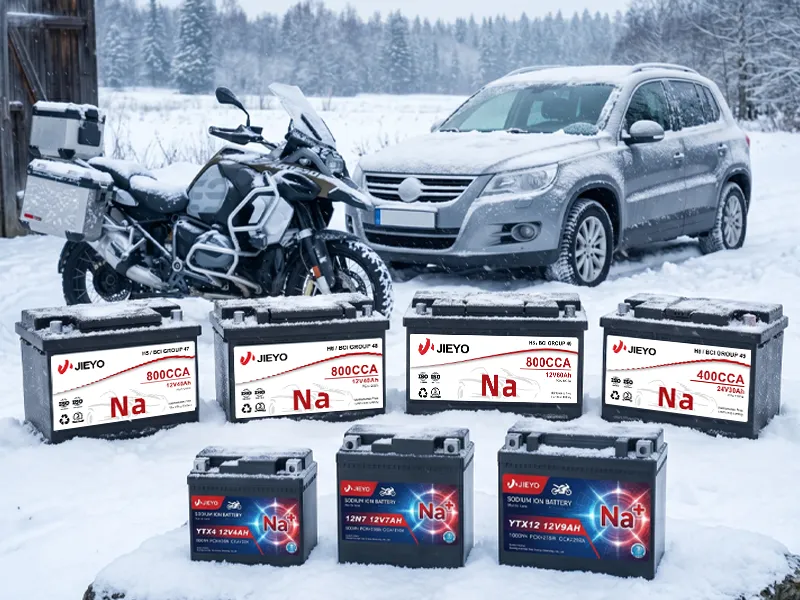
Here’s what actually happens on a cold morning:
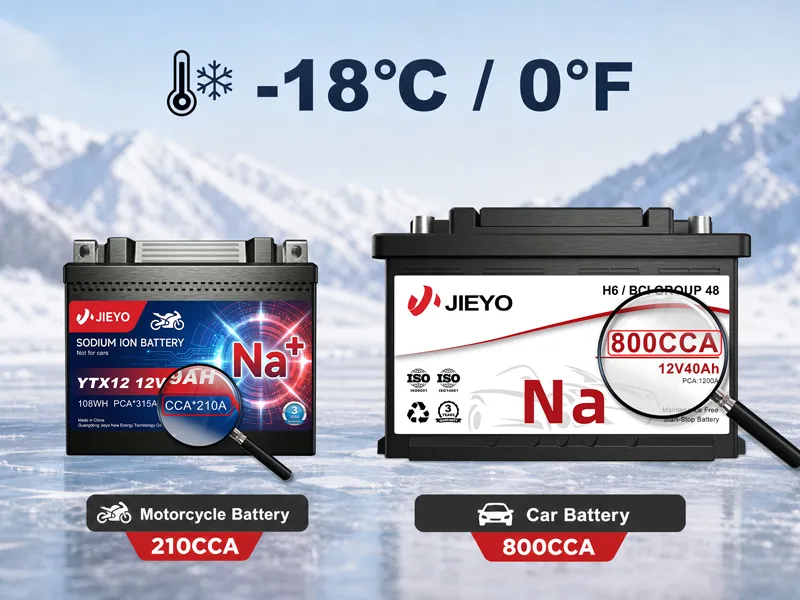
A battery is a chemical device. Chemical reactions slow down in the cold. At 0°F (-18°C), a battery’s internal resistance increases significantly — it simply cannot push current out as fast as it can at room temperature.
At the same time, cold engine oil turns thick and sluggish. The starter motor has to work harder to turn the engine — it needs more current, not less.
So you have two things happening at the exact same moment:
That gap — between what the battery can deliver and what the starter needs — is exactly what CCA measures.
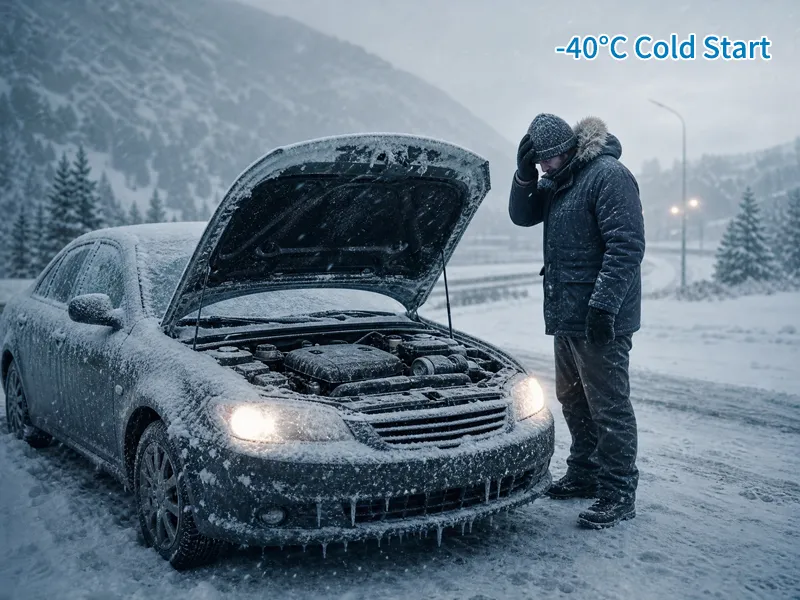
A battery with low CCA will fail right there. The voltage drops below what the starter needs, the engine doesn’t turn, and you’re stuck.
A battery with high CCA can still push enough current through the cold chemical sludge to get the job done.
That’s why CCA exists. Not as a marketing number. As a guarantee that your battery will work when the temperature drops.